Our Generous Donors
The Weiss-Livnat International MA Program in Holocaust Studies was created with and is sustained by the generous support of our donors.
Our Founder, Yitzhak Livnat z"l
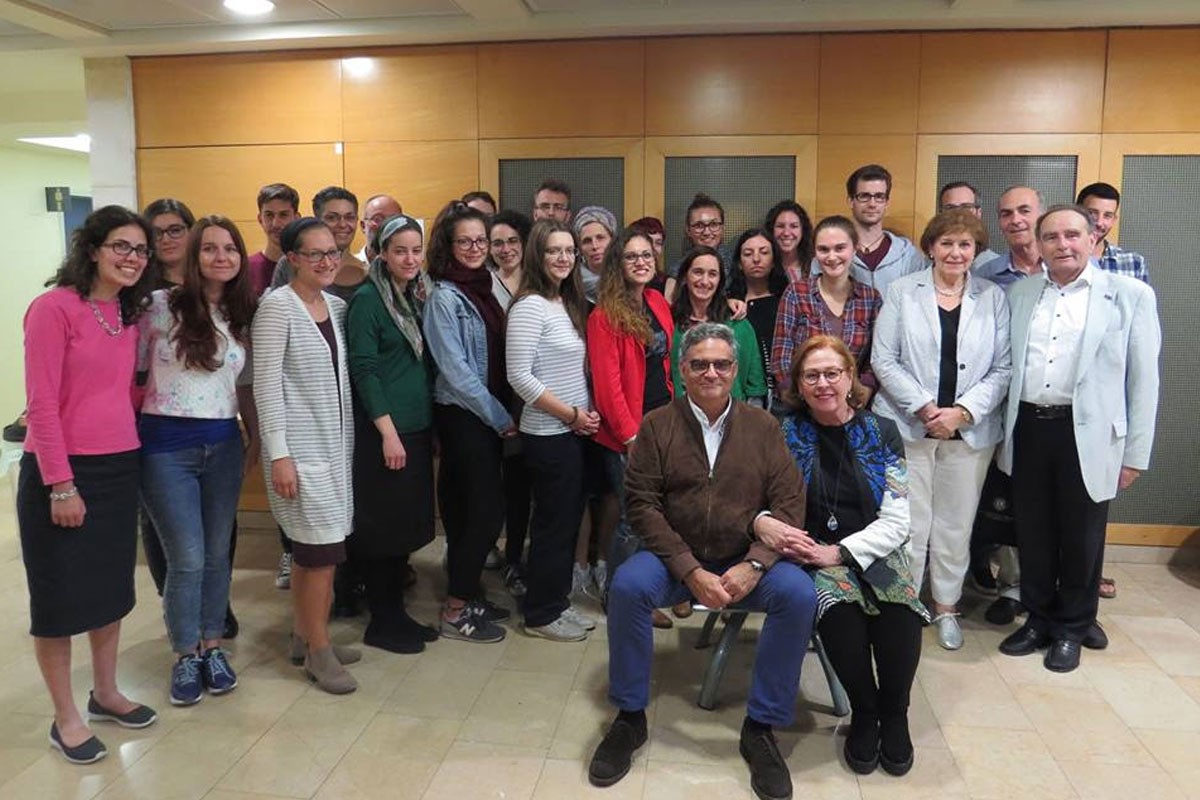
The Weiss-Livnat International MA Program in Holocaust Studies is named after the founder of the program, Yitzhak Livnat z"l. Yitzhak was a Holocaust survivor from Hungary and it is with great pride and honor that our program memorializes his and his family's story. The first five Cohorts of the MA Program had the honor to meet with and hear Yitzhak's incredible personal story of survival and triumph. Since Yitzhak's passing in 2017, the legacy of the Weiss-Livnat MA Program is preserved by his son and daughter-in-law, Honorary Dr. and Mrs. Doron and Marianne Livnat.
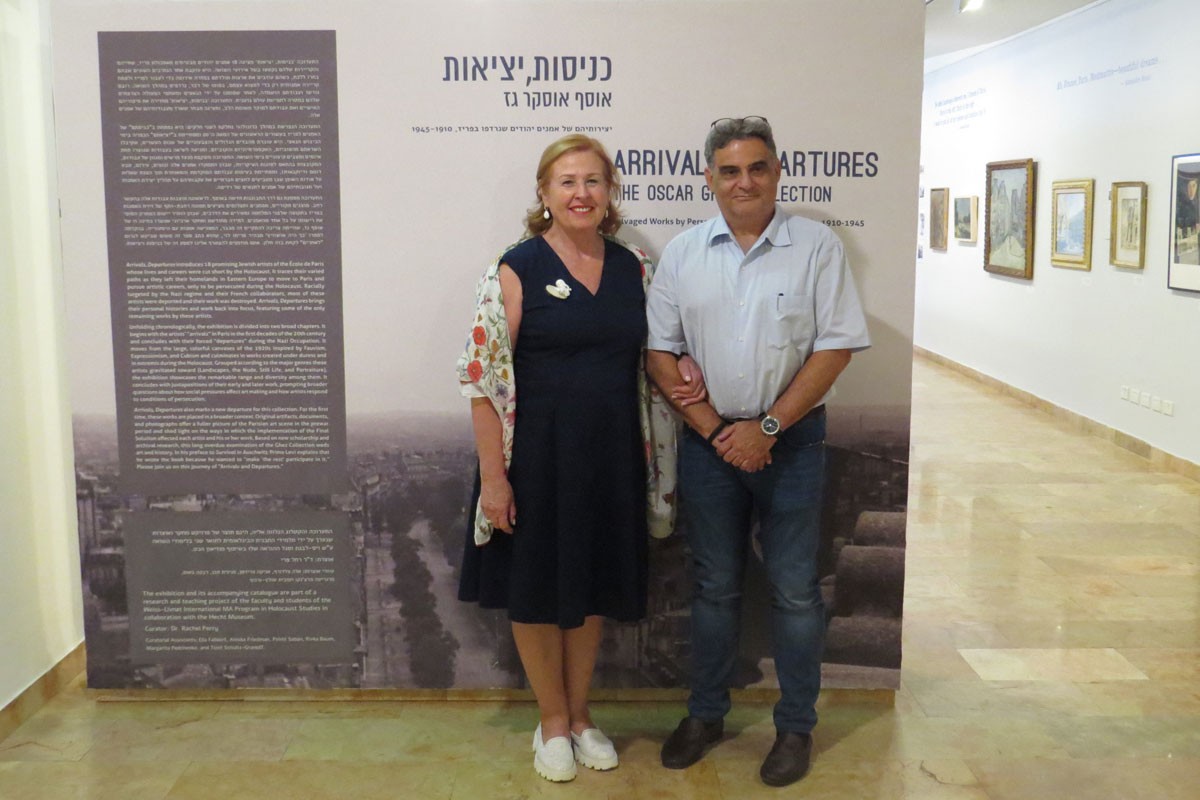
Honorary Dr. and Mrs. Doron and Marianne Livnat
Doron and Marianne Livnat have ensured the legacy of Yitzhak Livnat's memory through their generous financial support of the MA program in Holocaust Studies. In 2019 they expanded their significant donation by endowing the funds to create an international, academic center, The Weiss-Livnat International Center for Holocaust Research and Education. The center is the umbrella organization under which the MA Program, The Journal of Holocaust Research, and the many academic and commemorative Holocaust events can flourish. We are incredibly grateful for their continued friendship and charitable contributions.
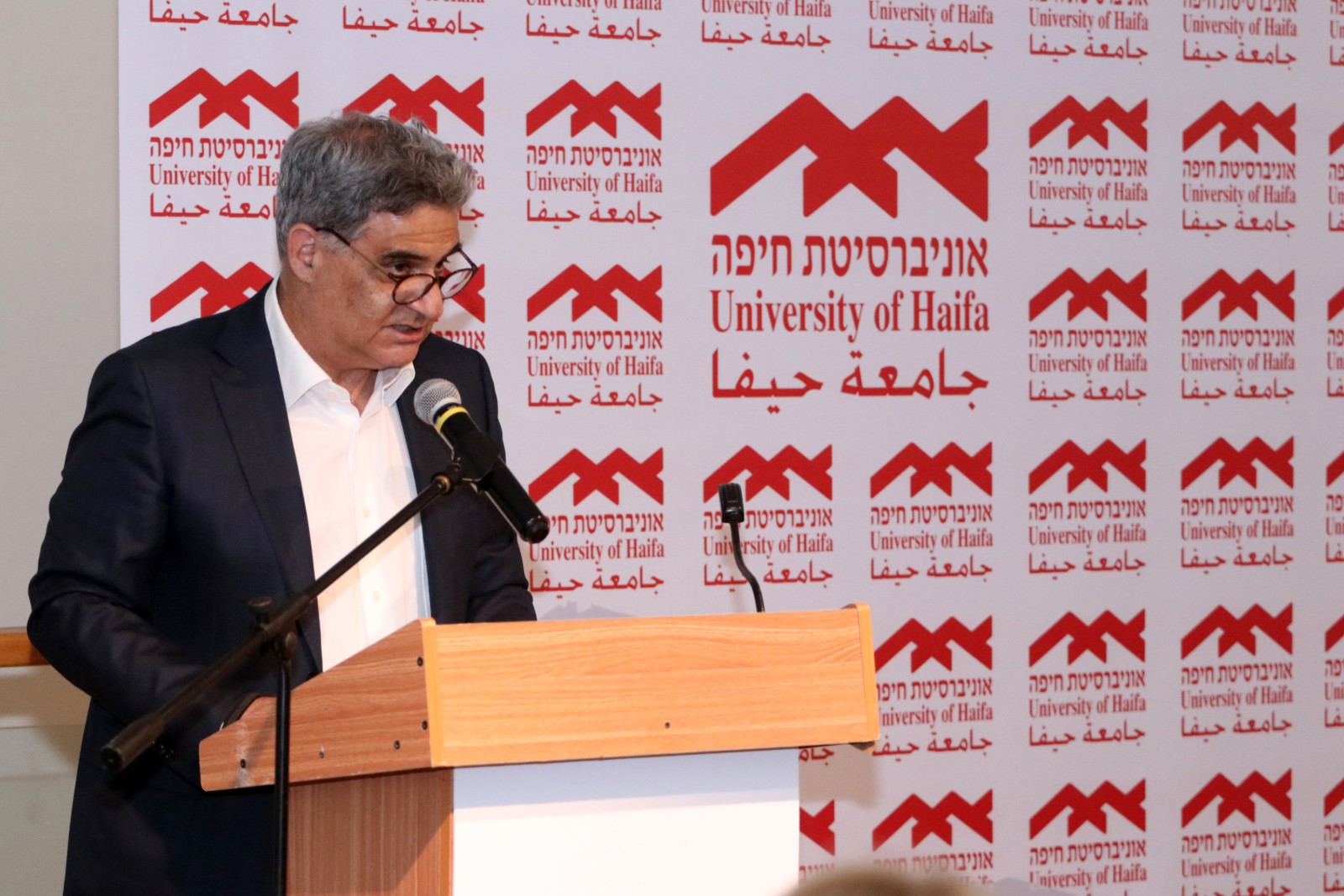
At the University of Haifa's 44th Annual Meeting of the Board of Governors in 2016, Doron Livnat was awarded an honorary doctorate in recognition of his outstanding leadership, which blends business success and far-reaching public and social activity; on his assistance to disadvantaged groups in society, out of an understanding and belief that strengthening them is the best guarantee of a more moral, just and successful society; on the contribution to promoting study and research of the Holocaust at the University of Haifa to preserve the memory of the Holocaust and pass the narrative on to future generations; on the continued support of the “Access for All” program and its impact on the population in northern Israel; and on his being an ambassador for the University of Haifa all around the world.
Doron Livnat's Speech (Na LaGa'aT, July 27, 2026)
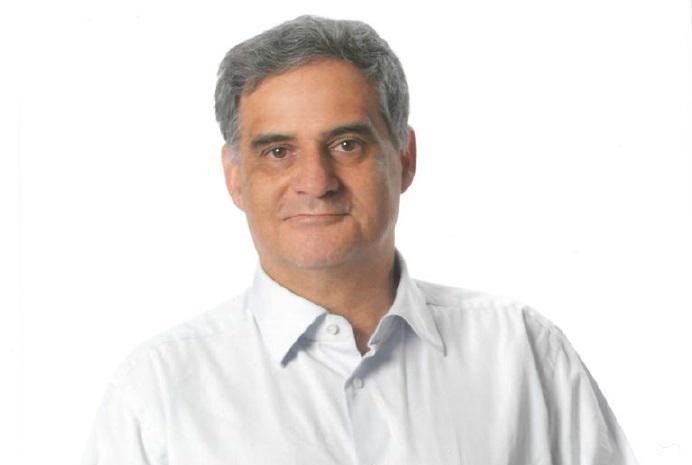
In March 1944, when he was only fourteen years old, my father was sent to Auschwitz. A child. At an age when teenagers should be dreaming about their future, he was forced to fight for every additional day of life.
He survived Auschwitz-Birkenau. He survived forced labor, hunger, cold, and humiliation.
And when it seemed that the nightmare could not get any worse, on January 18, 1945, he was sent on a death march.
At the end of that month, he arrived at the Mauthausen concentration camp in Austria.
There, in the midst of hell, a small miracle occurred: he was reunited with his father, my grandfather, Willy. Together they continued to fight for their lives, shoulder to shoulder, performing brutal slave labor in Mauthausen’s notorious stone quarry.
Read more
Then, on March 12, 1945, my father's fifteenth birthday, the Nazis opened Gunskirchen, the last concentration camp they would establish. What should have been a day of celebration became another chapter in a seemingly endless nightmare.
Instead of celebrating his birthday, he and his father were sent there on another death march.
Only on May 4, 1945, did the nightmare finally end.
My father and grandfather were liberated by the 71st Division of the United States Army. They emerged free, exhausted and starving. My grandfather Willy died three days after liberation from typhus and exhaustion and was buried in a mass grave without any record of its location. My father survived thanks to the care of a United States Army doctor.
For years, I carried one question with me:
How does a person who has gone through all of this continue to live? How can someone endure the greatest hell humanity has ever known and still remain optimistic, positive, full of life, and believing in the goodness of people?
One day, I asked my father that question.
I expected a long answer. Perhaps a story. Perhaps an explanation.
But he looked at me and said only one sentence:
“I did not forget. I did not forgive. But I also did not make myself a victim.”
In that one sentence, he defined his entire life.
He chose to remember, because we must never forget.
He did not forgive, because there are crimes that cannot be forgiven. But he also refused to let the Nazis defeat him a second time. He would not allow the past to become his identity.
Rather than letting the horrors of the past define him, he chose to build his life around hope. He raised a family, built a life, worked, loved, laughed, and gave us a home filled with warmth and faith in humanity.
My father taught me that the greatest victory over evil is not merely survival itself. The true victory is the choice of life. The choice to continue dreaming, loving, creating, and giving the next generation a better future.
This is the legacy he left us. Not only a story of the Holocaust and survival, but a story of the human spirit. A spirit that can be wounded, but cannot be broken.
This is a story of renewal and faith in the future.
I would like to conclude with a Hungarian poem that my grandmother, whom I never had the opportunity to meet, taught her five children. I know that both my father and his sister Heidi recited it during their time in those cursed camps.
The passage was quoted in the book Outcasts, which tells the story of my father's life. Among all the poems they recited, the stories they told, and the songs they sang, Heidi's favorite was “The Prisoner” (A Rab) by Sándor Petőfi:
I struggle for you, Freedom,
Though my hands and feet are chained.
I long for you, Light,
Like a mole surviving beneath the earth.
When will the hour of freedom arrive?
When will happiness have its turn?
When shall I breathe free air again,
And feel a ray of sunlight shine above me?
Hope is the companion of the dreamer of freedom,
Even after years of unfulfilled promises.
Hope is the companion of the one who looks ahead,
Who watches for another year of dreams fulfilled.
(Free translation)
Amsterdam Unveils New Holocaust Museum
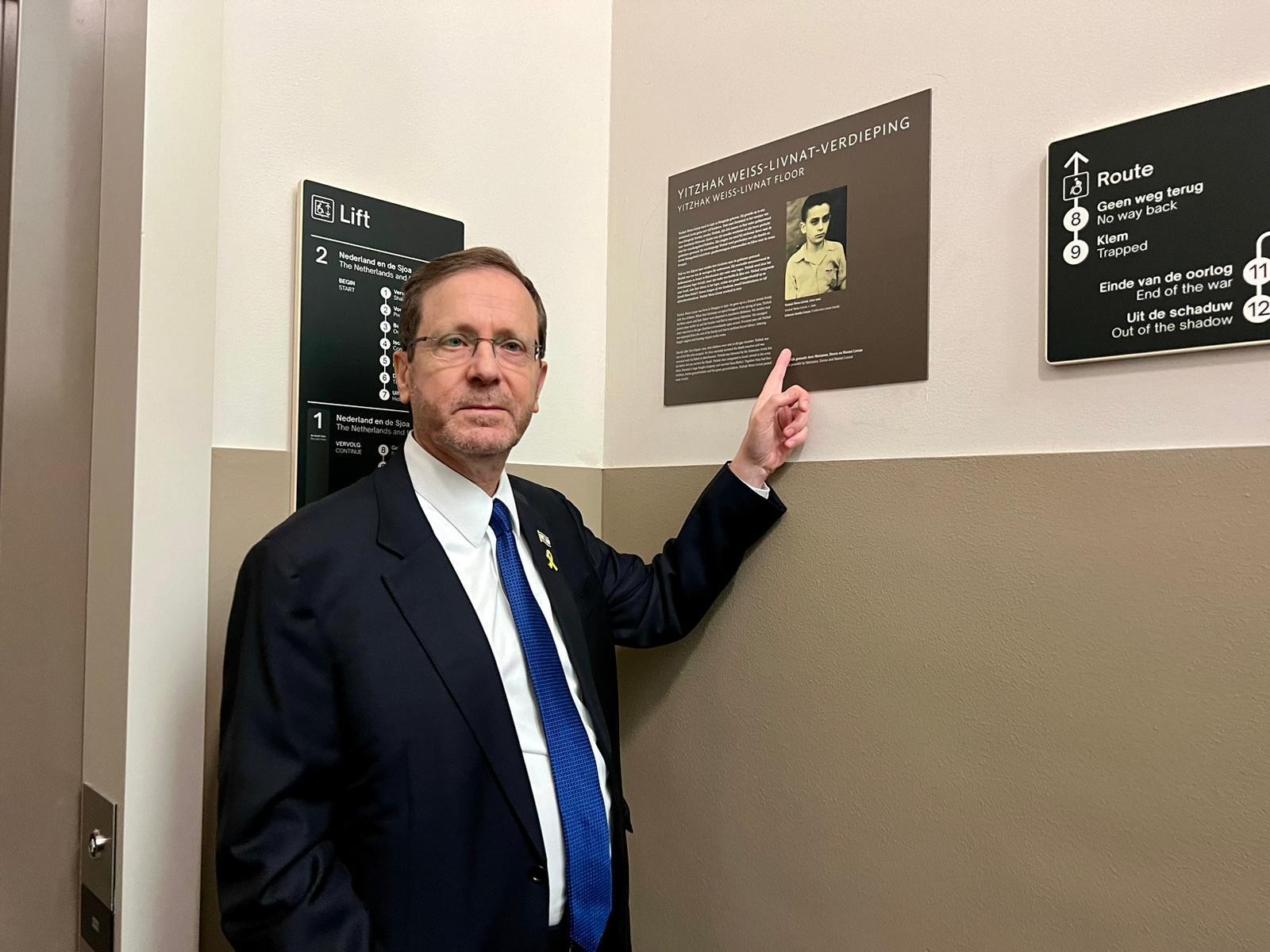
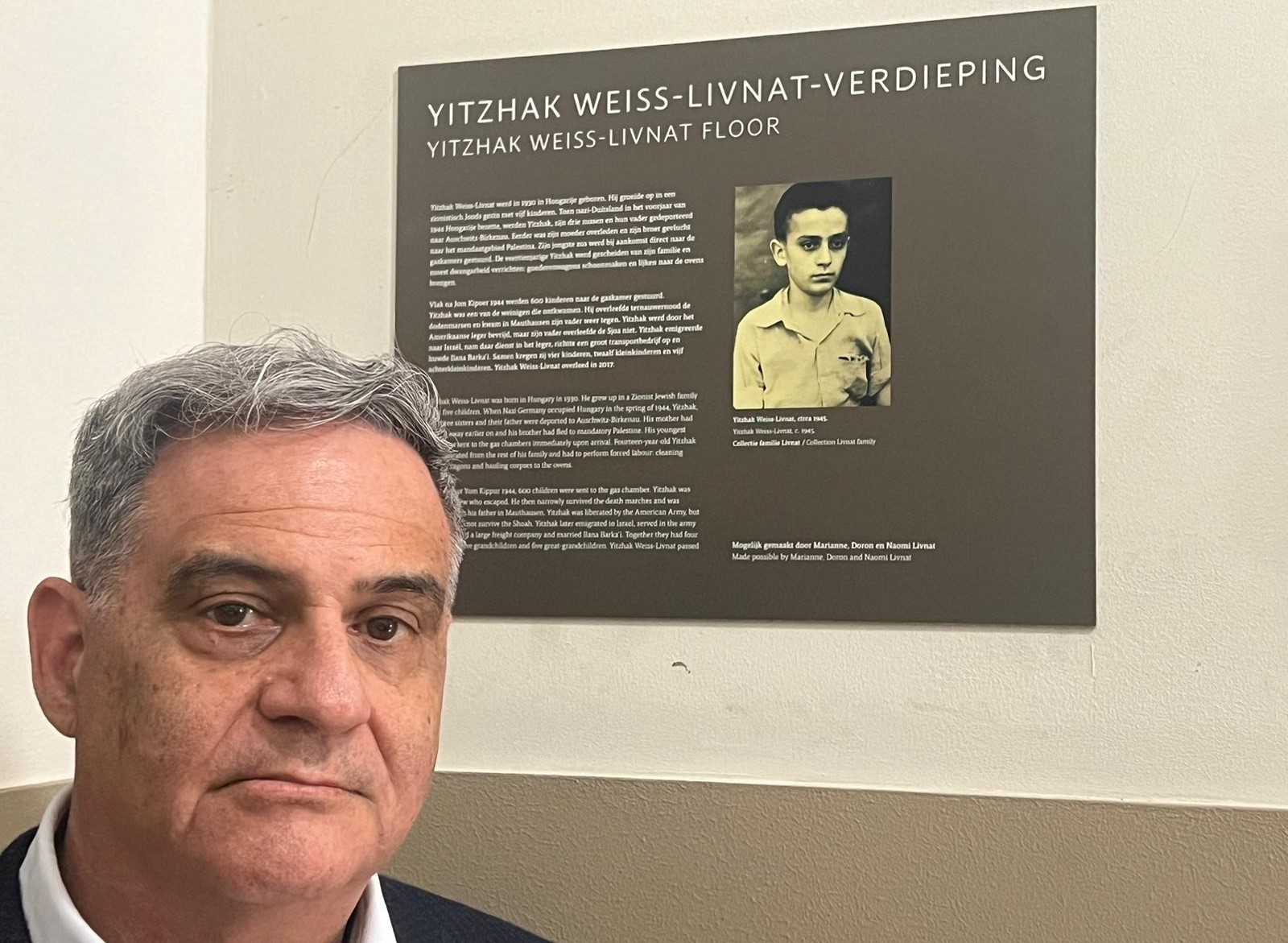
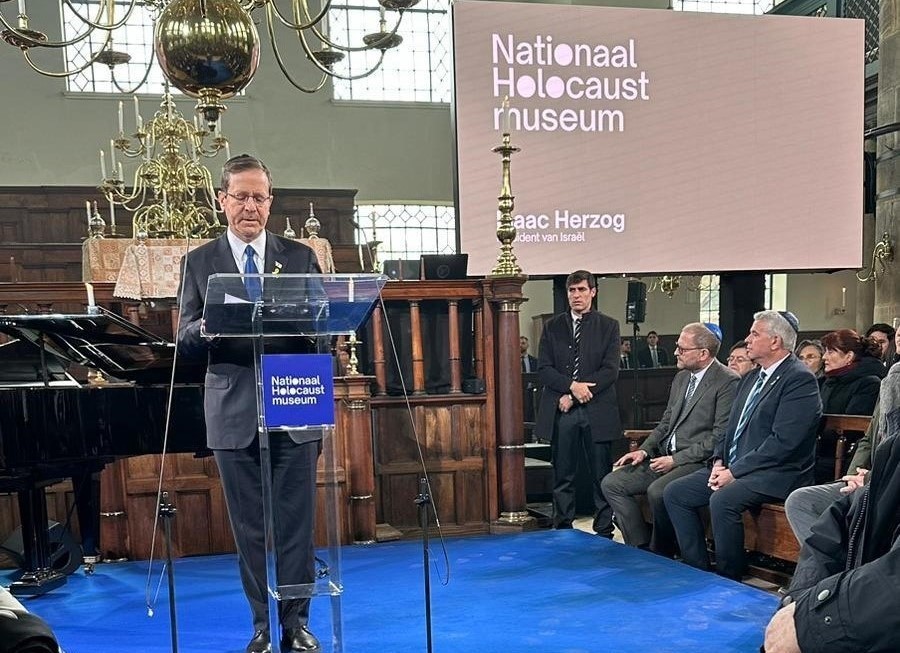
On March 10, 2024, the National Holocaust Museum was inaugurated in Amsterdam with the participation of King Willem Alexander of the Netherlands, President of the State of Israel Isaac Herzog, and Honorary Doctor of Haifa University Doron Livnat, co-founder of the Weiss Livnat MA Program in Holocaust studies.
In the museum, a floor is dedicated to the memory of Yitzhak Livnat, after whom the program was named and donated by his son Doron Livnat.